

Rhinophyma: When Rosacea Changes the Structure of the Skin
Most people picture rosacea as redness, flushing, or the occasional breakout. Something to manage, to cover, to keep under control.
But rosacea has a less-talked-about endpoint, one that goes well beyond inflammation. It's called rhinophyma, and by the time it develops, the skin hasn't just reacted. It has changed.
What is rhinophyma?
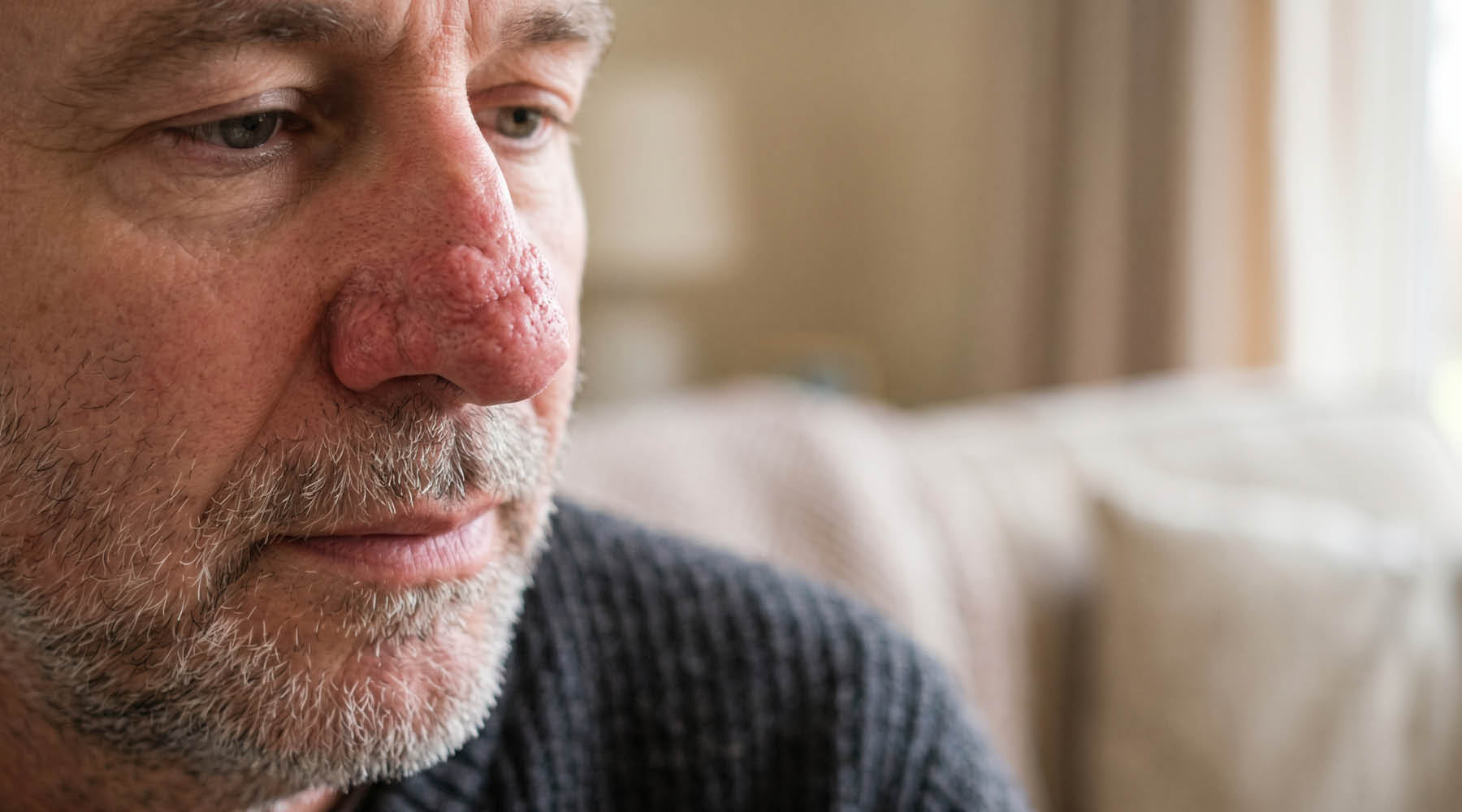
Rhinophyma is an advanced form of rosacea where the skin, most often on the nose, becomes thickened, enlarged, and uneven in texture. In more pronounced cases, the nose takes on a bumpy or bulbous appearance, with enlarged pores, excess oiliness, and visible nodules.
It doesn't happen suddenly. It develops slowly, over years, and it almost always follows a long history of rosacea that hasn't been adequately controlled.
 What's actually happening beneath the surface
Rhinophyma isn't simply bad rosacea. It's what chronic, unresolved inflammation does to skin tissue over time.
When the skin stays in a constant state of inflammation, never fully settling, never fully healing, the body responds by remodelling. That means:
- Oil glands enlarge and multiply
- Connective tissue overgrows
- The skin itself thickens and scars from within
At the same time, blood vessels remain persistently dilated, the immune system stays overactivated, and microbial imbalances (including Demodex mite populations) continue to fuel the cycle.
The result isn't just redness. The skin starts to physically change its structure.
Why does it happen to some people and not others?
Rhinophyma is more commonly seen in men, particularly from middle age onward, and in those who have had rosacea for many years. But gender is almost beside the point.
The real determining factor is duration. Specifically, how long the skin has been left in a state of ongoing, unmanaged inflammation. The longer the chronic activation continues without being properly addressed, the greater the risk of permanent structural change.
Why this stage is so much harder to treat
Once rhinophyma is established, the options narrow considerably. Skincare alone can't reverse thickened, fibrotic tissue. At this stage, treatment typically requires medical intervention — laser resurfacing, dermabrasion, or, in more advanced cases, surgical correction to remove excess tissue.
This is precisely why the stage before rhinophyma matters so much.
There is a window, where the progression can be slowed or stopped altogether. But that window requires more than temporary symptom relief.
What actually needs to be addressed
Preventing progression means going after the underlying drivers, not just the surface symptoms:
- Chronic inflammation needs to be genuinely controlled, not just periodically calmed
- Vascular instability — the flushing and the persistent dilation needs to be actively managed
- Immune dysregulation needs to be addressed so the skin stops responding with such intensity
- Microbial imbalance needs to be corrected, not simply suppressed
When these are left running in the background, the skin stays in a constant cycle of activation. And it's that cycle, sustained over years, that drives structural change.
Where most approaches fall short
Many rosacea treatments are designed to reduce redness temporarily, calm a flare, or make the skin look more manageable in the short term. And they can do that.
But rhinophyma doesn't develop from occasional flares. It develops from inflammation that never truly resolves, that sits beneath the surface even when the skin looks relatively settled.
If the root drivers aren't being addressed, the condition can continue progressing quietly, even when things appear to be under control.
The bigger picture
Rosacea is often framed as something to manage indefinitely, a condition you learn to live with rather than one that can genuinely improve.
But the risk of thinking that way is that management without progression prevention isn't actually neutral. The skin doesn't stay the same while you keep things ticking along. Without proper intervention at the right level, it can continue to change, slowly, subtly, and in ways that become much harder to reverse.
Rhinophyma is what rosacea can become when chronic inflammation is left unchecked for too long. The skin doesn't just stay red and reactive; it adapts to that state, thickening and remodelling in ways that go far beyond what any serum or prescription cream can undo.
If you're living with ongoing flushing, redness, or inflammation, the goal shouldn't just be getting through flares. It should be stopping the progression.
Because with rosacea, what seems manageable today can become something far more difficult to treat tomorrow. The earlier the underlying drivers are properly addressed, the more options you have, and the better your skin's long-term trajectory looks.
Read more
If you've been managing rosacea for any length of time, chances are you've been prescribed metronidazole. It's one of the most widely recommended topical treatments, and for good reason, it genuine...
There's a ritual that most rosacea sufferers know intimately. You wake up, and before you do anything else, before coffee, before checking your phone, you go to the mirror. Not out of vanity. Out o...