


Is Metronidazole Actually Fixing Your Rosacea — Or Just Masking It?
If you've been managing rosacea for any length of time, chances are you've been prescribed metronidazole. It's one of the most widely recommended topical treatments, and for good reason, it genuinely helps. But if you've noticed that your skin improves while you're using it, only to flare again when you stop, you're not imagining things. And you deserve a clearer explanation of why.
What metronidazole actually does
Metronidazole is an antimicrobial and anti-inflammatory agent. In the context of rosacea, its most important job isn't fighting infection; it's calming the inflammatory response that causes redness, bumps, and pustules.
It works in part by reducing oxidative stress in the skin, which is elevated in rosacea and contributes to visible redness and tissue irritation. It also has some activity against the microorganisms associated with rosacea flares, including Demodex mites and the bacteria linked to them, helping to dial down the immune reactions they trigger.
For many people, especially those with papulopustular rosacea (the type with inflamed bumps and pustules), metronidazole can bring real relief. It's also relatively gentle, which makes it a practical option for skin that's already reactive and compromised.
So why doesn't it feel like a solution?
Here's the honest answer: because for most people, it isn't.
Rosacea isn't simply inflammation, it's driven by several interconnected issues happening beneath the surface:
- Neurovascular dysregulation — the flushing and vasodilation that no cream seems to fully touch
- An overactive immune response — your skin is essentially stuck in a state of high alert
- Microbial imbalance — not an infection, but a disruption of the skin's normal microbiome
- A compromised skin barrier — which allows irritants in and moisture out, keeping the cycle going
Metronidazole addresses the inflammation. But it doesn't rebuild your barrier, stabilise your blood vessels, or recalibrate your immune response. So when you stop using it, nothing upstream has changed, and the symptoms return. This isn't a failure on your part. It's a gap in the treatment approach.
The loop many rosacea sufferers get stuck in
Suppression, improvement, return. Suppression, improvement, return.
Many people find themselves using metronidazole indefinitely, not because the rosacea has been resolved, but because without it, everything flares back up. The skin is being managed, not healed.
Long-term, this also raises questions about the skin's microbiome. Metronidazole isn't selective, it reduces microbial populations broadly, which over time can work against the balanced, resilient microbiome your skin actually needs.
What about flushing and persistent redness?
If redness and flushing are your biggest concerns (rather than bumps), you may have noticed that metronidazole doesn't do much for them. That's because flushing is largely a vascular and neurological issue , driven by nitric oxide, heightened nerve sensitivity, and dysregulated blood flow. Metronidazole simply doesn't work on those pathways.
So while your skin might look cleaner in terms of active lesions, the heat, the redness, and the reactivity to wine/temperature/stress often remain.
Where metronidazole still earns its place
None of this means you should dismiss it. Metronidazole is a useful, well-tolerated tool, particularly for calming active flares and reducing lesion count. For many people it's a sensible part of a wider approach.
The problem is when it becomes the entire approach.
What actually needs to change
Managing rosacea in a way that genuinely shifts the trajectory of your skin means addressing more than inflammation. It means:
- Repairing your skin barrier so it stops letting triggers in and starts holding moisture
- Supporting your microbiome rather than simply suppressing it
- Targeting the immune pathways that keep your skin chronically reactive
- Addressing vascular instability if flushing is part of your picture
- Managing Demodex where this is a contributing factor
When these pieces are addressed alongside inflammation control, treatment stops feeling like damage limitation and starts feeling like progress.
The takeaway
Metronidazole works within its limits. It's earned its place in rosacea care over decades. But it was never designed to resolve rosacea, and relying on it alone means your skin stays in a cycle of flare and suppression rather than actually changing.
If that sounds familiar, it might be time to look at what's driving your rosacea, not just what's calming it down. A more complete strategy, one that works on the skin barrier, microbiome, immune function, and vascular health, is where real, lasting improvement tends to come from.
You deserve more than management. Your skin can actually get better.
Read more
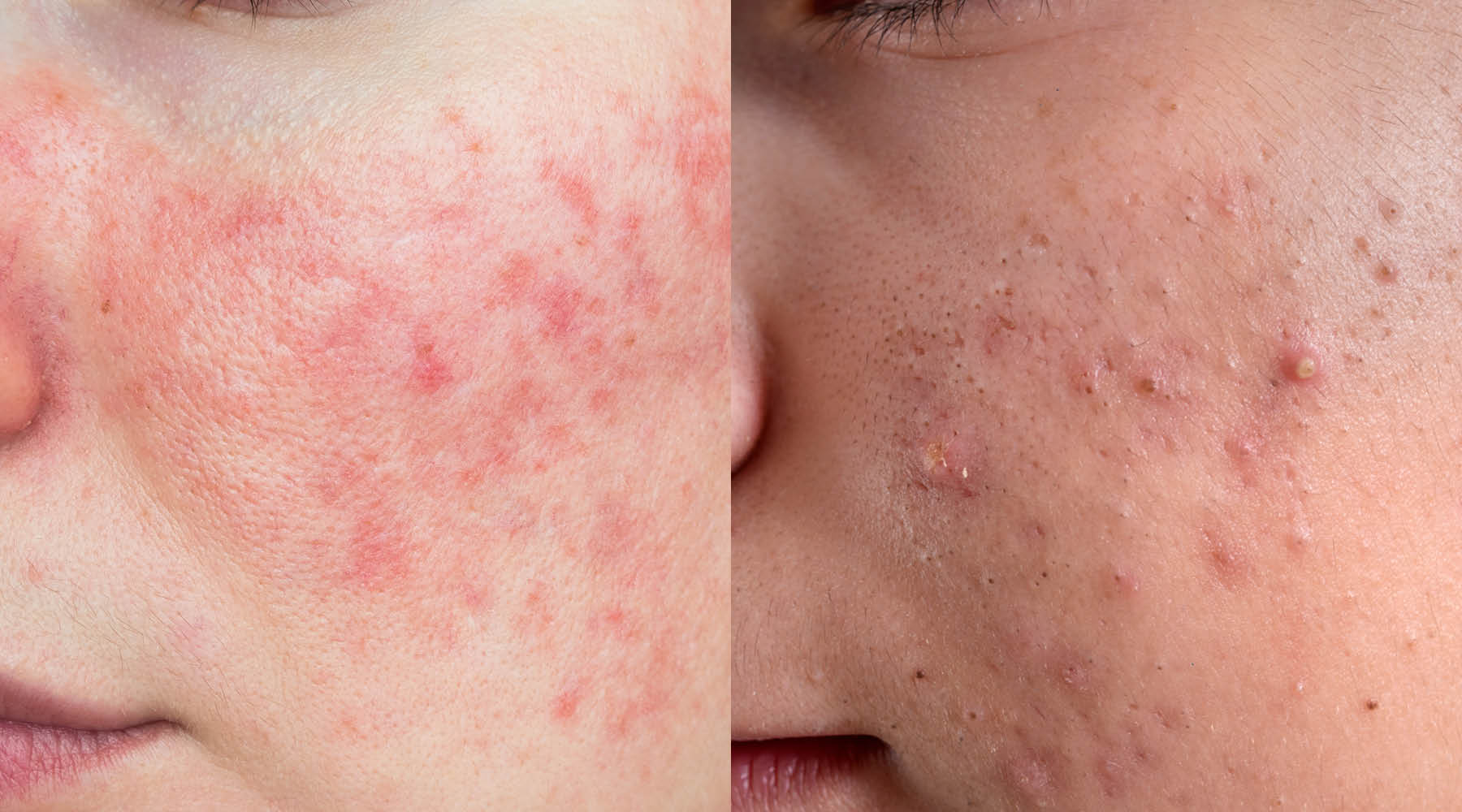
If you’ve ever questioned whether your skin is acne or rosacea, you’re not alone. Redness, inflamed bumps, and pustules that don’t behave the way you expect – it can be incredibly difficult to tell...

Most people picture rosacea as redness, flushing, or the occasional breakout. Something to manage, to cover, to keep under control. But rosacea has a less-talked-about endpoint, one that goes well ...